
Chatham County Arrest Records and Charges
Chatham County arrest records are the law enforcement and custody records tied to an arrest. They may begin with an officer, a warrant, a criminal summons, a magistrate decision, a bond setting, or a jail booking. The Chatham County Sheriff's Office is the local source for sheriff detention links, arrest blotter access, bond information, VINE custody notices, and the official Sheriff contact path. That side of the record helps identify a recent arrest, but it is not the final court case file.
Court charges after arrest are different. A charge record is the accusation that moves through the Chatham County state court system after a citation, warrant, summons, indictment, or other charging paper reaches the Clerk of Superior Court. The District Attorney for Prosecutorial District 18 may dismiss, amend, negotiate, or pursue charges after law enforcement starts the process. The full case file, plea, disposition, sentence, and judgment belong in the criminal court record, while this page focuses on the arrest-to-charge path.
The Sheriff's home page is a useful starting point for Chatham County arrest records because it gathers detention links in one place. The official source is the Chatham County Sheriff's Office home page, which points users to inmate search, arrest blotter, bond types, VINE, and court-date tools.
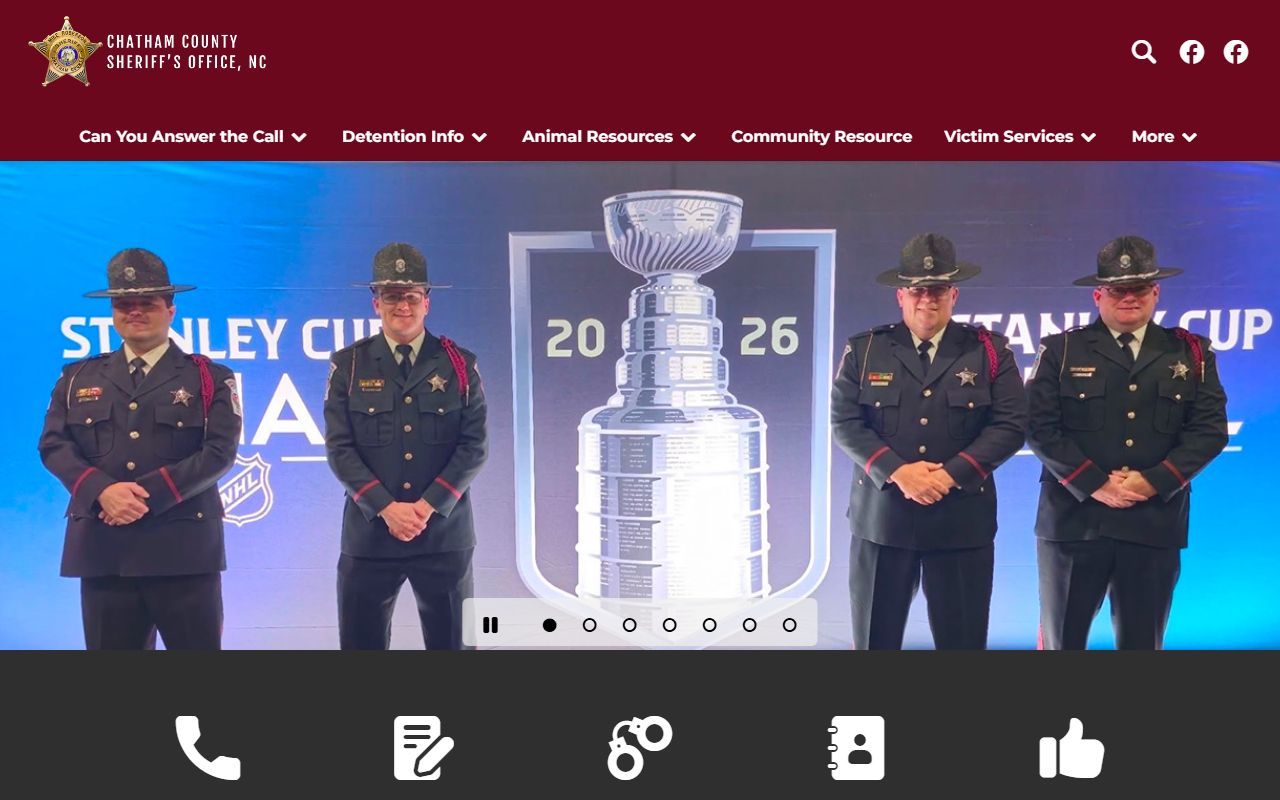
That Sheriff source helps with the arrest side first. The court charge record still needs to be checked through court channels when a case has opened.
Search Chatham County Arrest Records
A good Chatham County arrest records lookup uses more than one channel because no single page was researched as a complete arrest-to-disposition database. Start with the Sheriff's arrest blotter for recent public entries. Then check the inmate search if the person may still be in custody. Next, use NC Portal Smart Search for the court charge record once a case exists. If a court date is the main question, Search Hearings can show a pending setting by name, case, citation, attorney, judicial officer, or courtroom criteria.
- Open the Sheriff's arrest blotter and use the Type to Search field for a name or date range.
- Check the Sheriff's inmate search for current custody, a public card, a Read More profile, or a VINE notice link.
- Use NC Portal Smart Search for Chatham County case information after a charge becomes a filed court case.
- Use NC Portal Search Hearings for court dates, especially when a failure-to-appear or bond question is tied to a pending setting.
- Call the Clerk of Superior Court for official file review, certified copies, or older records that are not clear online.
The Chatham Sheriff arrest blotter has a Type to Search field and weekly entries. Research found visible examples such as April 12-18, 2026, April 19-25, 2026, April 26-May 2, 2026, April 5-11, 2026, and August 31-September 6, 2025. Those date ranges are helpful for recent arrests, but an arrest blotter does not prove the final charge status.
The arrest blotter image comes from the official Chatham Sheriff arrest blotter, which is one of the county-specific sources for recent arrest context.
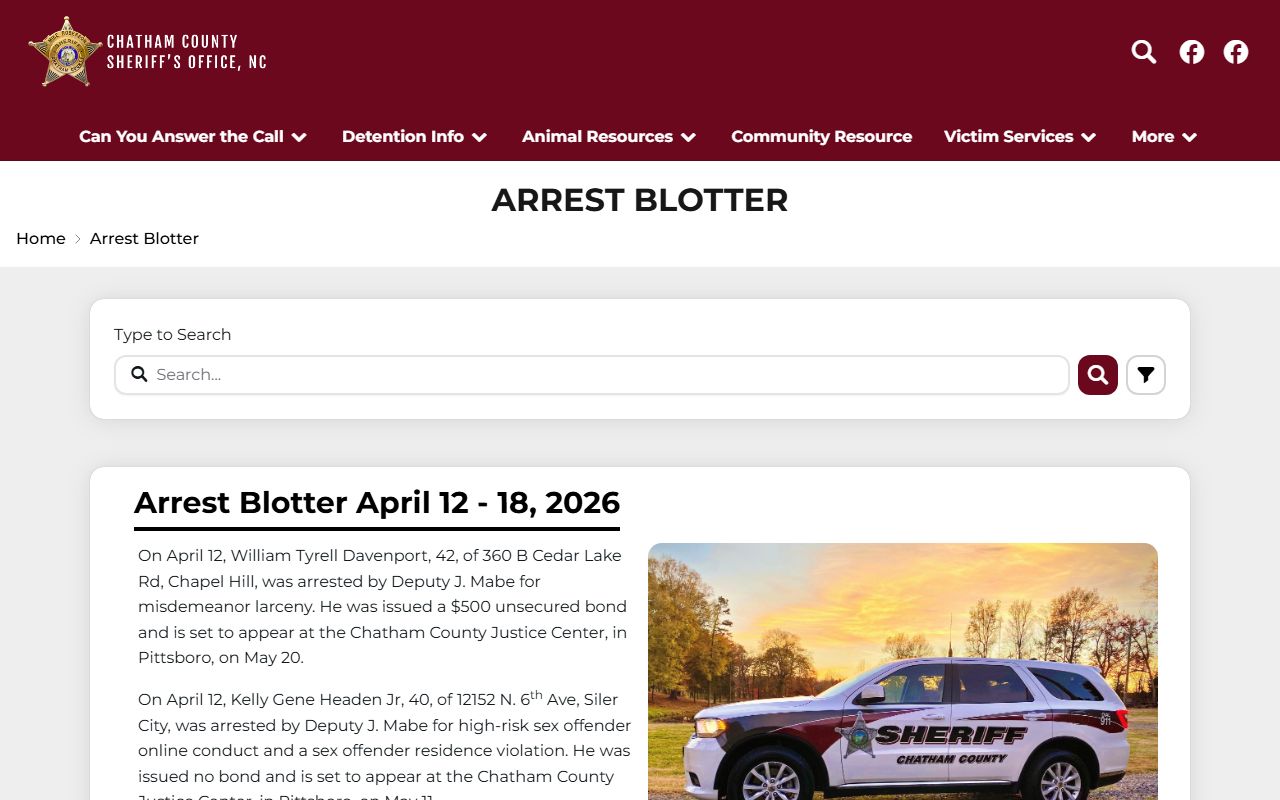
The blotter can point to the right person or week. The next step is to confirm the court charge status in the state court system.
Chatham County Charging Documents
Charging documents are the papers that turn an accusation into a court charge record. In Chatham County, the document may be tied to a warrant, summons, citation, indictment, or other criminal filing. The court record may show a case number, party names, charge text, hearing events, disposition entries, and sentence fields. The NC Judicial Branch criminal-case material also notes that charging documents can help identify a case number.
| Document Type | Who Uses It | How It Fits Chatham Charges |
|---|---|---|
| Complaint or warrant process | Law enforcement, complainant, magistrate, or prosecutor path | May lead to arrest, service, bond, and later court filing. |
| Criminal summons | Magistrate and law enforcement service path | Serves the defendant without arrest when a summons is issued instead of a warrant. |
| Indictment | Grand jury and Superior Court path | Often moves felony charges into Superior Court after indictment or transfer. |
The NC crime victims help topic explains the practical split between a warrant and a criminal summons. If a warrant is issued, law enforcement attempts to find and arrest the defendant, and release depends on conditions set by a magistrate. If a criminal summons is issued, the person is served without arrest. That distinction explains why the same alleged offense may appear first as an arrest, a summons, a blotter entry, or a later court case.
Chatham County court charges should be read with the statewide court access rules in mind. The NC court record-keeping statute, N.C. Gen. Stat. section 7A-109, requires clerks to maintain records, files, dockets, and indexes and makes them public during regular office hours unless the law says otherwise.
Bond After Chatham Arrest Records
Bond and release terms are part of the early arrest-to-charge record. Research found the Sheriff's bond page listing Cash Bond, Custody Release, No Bond, Secured Bond, and Secured Bond Options as visible entries. The detailed page text was not available in extraction, so the safer Chatham-specific point is that the Sheriff's bond page names the local categories while magistrates or judges set release conditions in the case.
The bond image is sourced from the Chatham Sheriff's bond types page, which is the local Sheriff channel for bond-category information after arrest.
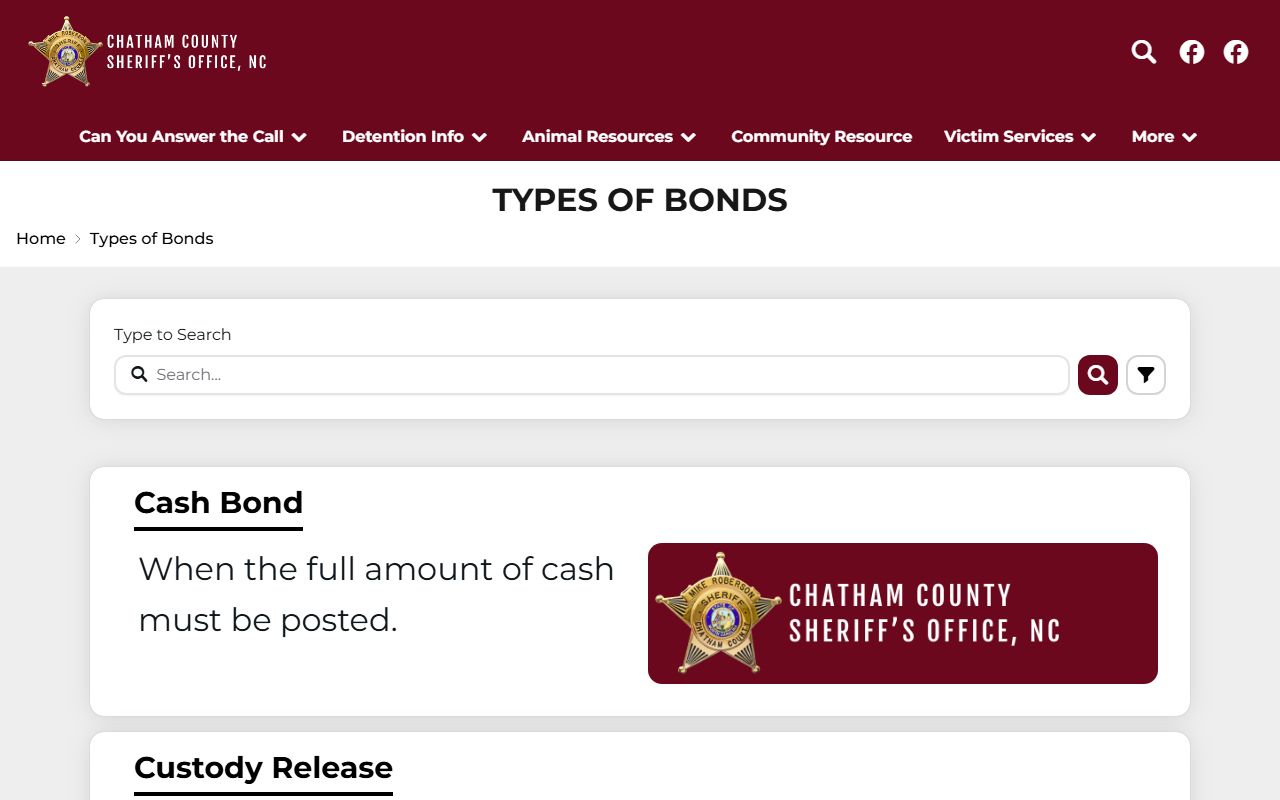
Bond status does not answer guilt or final case outcome. It shows release conditions during the period when charges are still pending or moving through court.
Note: Contact the magistrate or Clerk when bond, hearing, or failure-to-appear details are not clear from public search tools.
Chatham County Charge Status
Charge status can change after an arrest. A charge may start in District Court, move to Superior Court after indictment, be amended by the prosecutor, be reduced through plea negotiations, be dismissed, or end in a conviction. The research file warns that court charge records after arrest are not the same as the full criminal case file because a charge can be changed, dismissed, superseded by indictment, consolidated for judgment, or resolved differently later.
| Status | What It Means | Where To Check |
|---|---|---|
| Pending | The charge has not reached a final disposition. | NC Portal Smart Search or Search Hearings. |
| Amended or reduced | The filed charge changed after review, plea talks, or court action. | Court case entries and Clerk file review. |
| Dismissed | The charge ended without a conviction on that count. | Disposition field in the court record. |
| Superseded by indictment | A later charging paper replaced or changed the path of a felony charge. | Superior Court case record and Clerk file. |
| Disposed | The court has entered a final or interim outcome. | Case status, judgment, and docket entries. |
NC Portal records can show case number, party name, charge, disposition, judgment, docket entries, bond, warrant, indictment, plea, sentence, probation, costs, and other terms. Anonymous public Portal views may show fewer fields than courthouse terminals, registered access, or elevated access. For official file review, the Chatham County Clerk of Superior Court remains the court record custodian.
Chatham Charges vs Convictions
An arrest record and a charge record are not proof of conviction. A charge is an accusation. A conviction is a final result after a guilty plea, verdict, or other qualifying adjudication. Chatham County arrest records may help locate the event, but the court case must be checked for disposition before treating the matter as resolved.
| Point | Charge | Conviction |
|---|---|---|
| Record stage | Appears after arrest, citation, summons, warrant, or filing. | Appears after a plea, verdict, judgment, or final finding. |
| Meaning | Alleged offense before final outcome. | Court result showing guilt or responsibility. |
| May change | Can be amended, reduced, dismissed, or superseded. | Can later be appealed, corrected, or affected by expunction if eligible. |
| Best source | Charging paper, docket entries, Portal, and Clerk file. | Judgment, disposition, sentence, and official court record. |
For the complete court case file and final outcome, use the Chatham County criminal court records page as the better fit. It is the case-level record rather than the arrest-to-charge pathway.
DA Review of Chatham Charges
The Chatham County contact directory lists the District Attorney phone line as (919) 545-3510. Chatham County is in Prosecutorial District 18, and the North Carolina Conference of District Attorneys county lookup names Jeff Nieman as District Attorney for District 18, which covers Chatham and Orange Counties. The District Attorney prosecutes criminal cases for the State of North Carolina after law enforcement or magistrates initiate charges.
The Sheriff profile image is sourced from the North Carolina Sheriffs' Association profile for Sheriff Mike Roberson, which lists Chatham County Sheriff contact details and local county context.
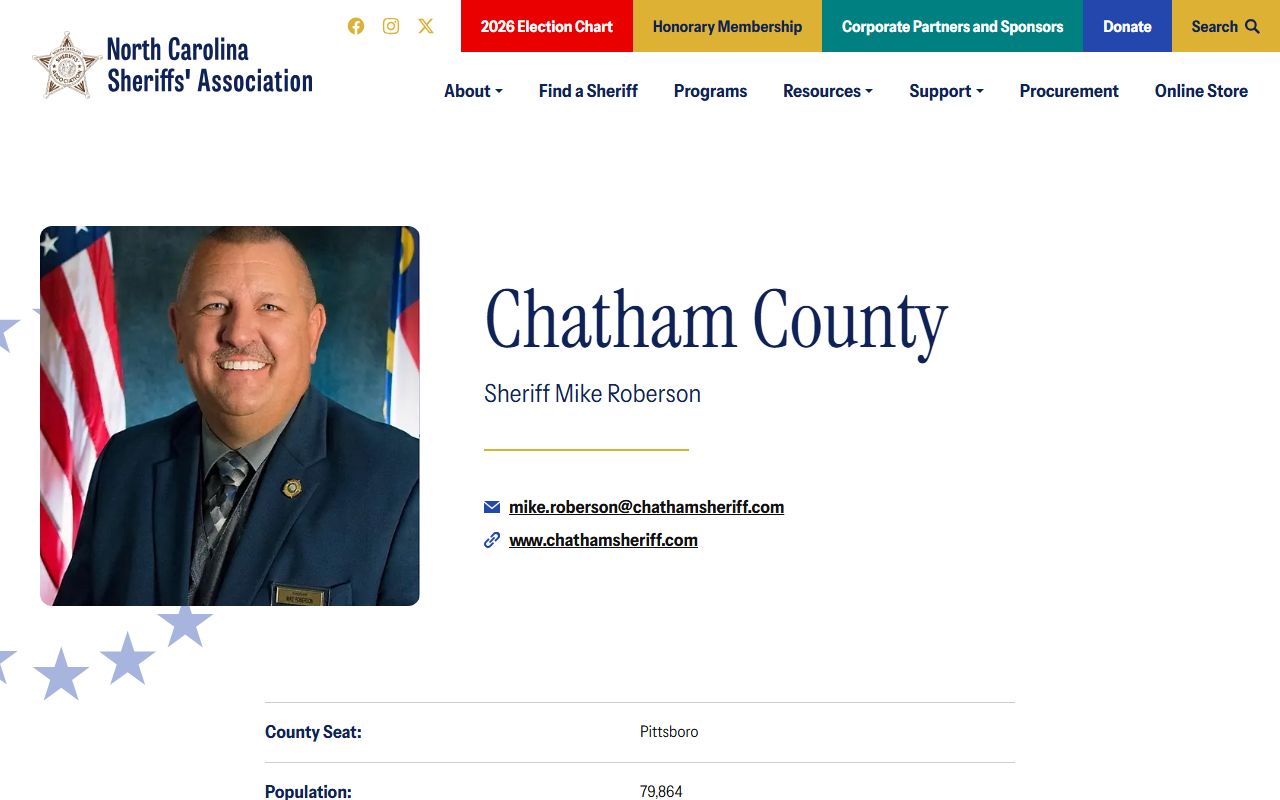
The Sheriff source supports the arrest and custody side. The prosecutor's role still matters because the arrest charge and the later court charge are not always identical.
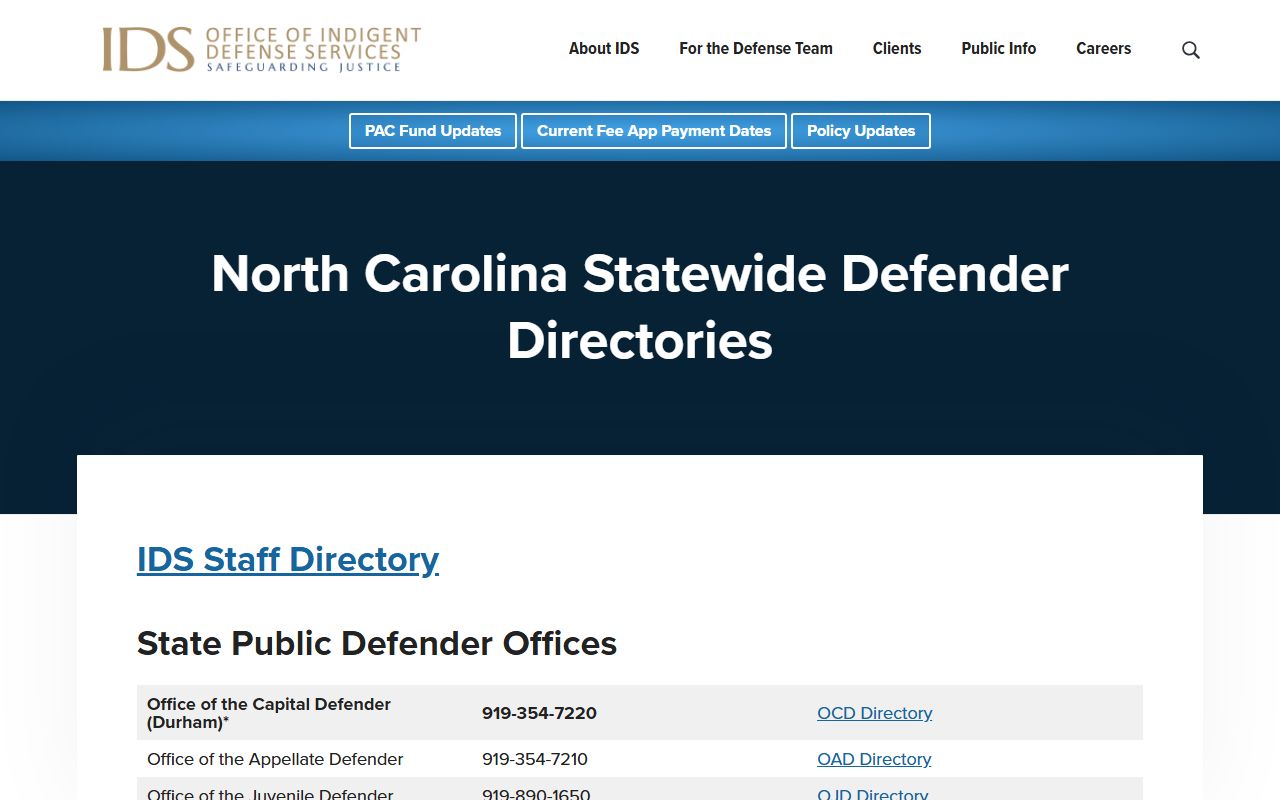
Indigent defense may also become part of the process. North Carolina Indigent Defense Services lists Defender District 18 for Orange and Chatham, with the public defender office in Hillsborough. That office is for qualifying appointed representation, not general private legal advice.
The defender directory image comes from the North Carolina defender directories, which identify Defender District 18 for Chatham and Orange.
Defense appointment is a court process. A public defender listing does not replace the need to check the actual Chatham County court charge record.
Statewide Charge Record Lookups
Chatham County records may connect with state-level systems after a person leaves county custody or when supervision is handled by the state. The NC Department of Adult Correction provides offender searches for state prison, probation, and parole records. Research notes that NC DAC does not have access to local county or city jail records, so it should not be used as the first stop for a fresh Chatham County jail booking.
The statewide offender search image is from the NC Department of Adult Correction criminal offender searches, which is relevant after a case moves into state prison or supervision records.
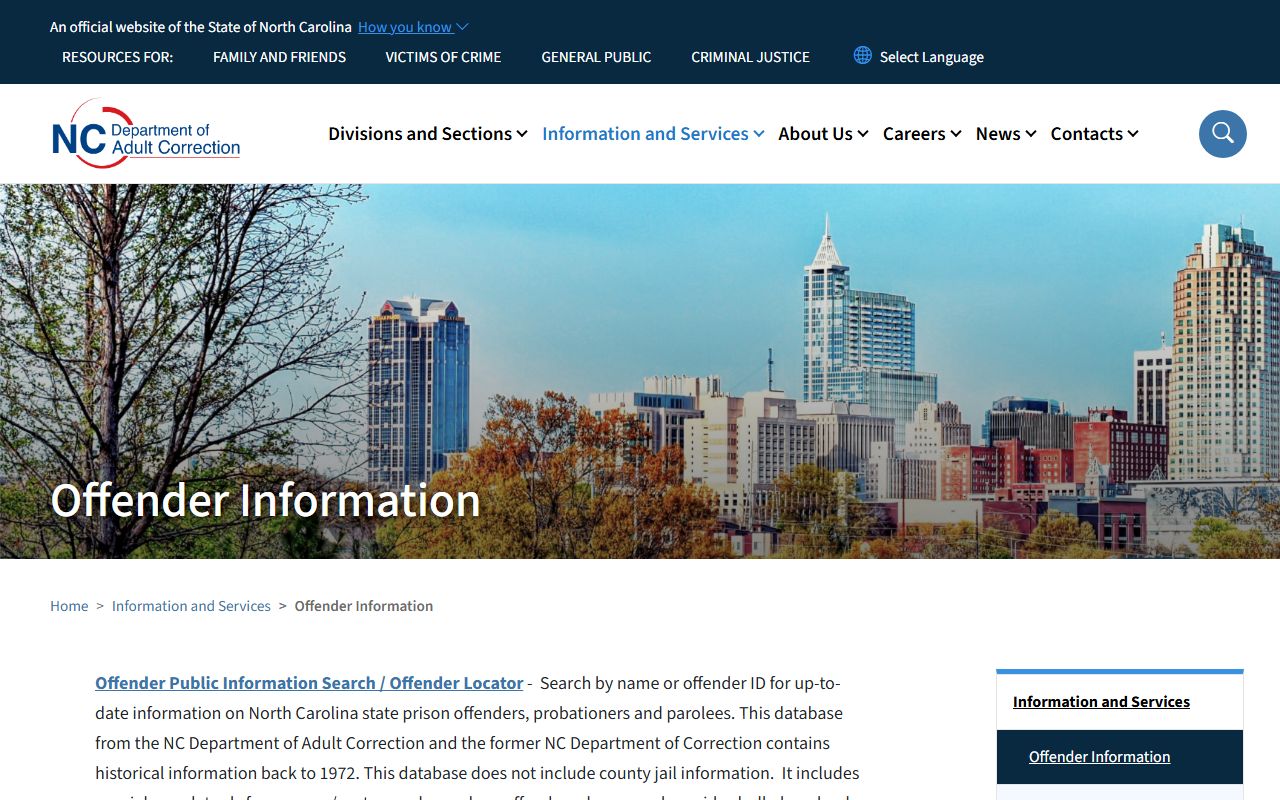
Use DAC for state correction records. Use the Sheriff for Chatham County jail custody, and use court records for filed charges and dispositions.
Restricted Chatham Arrest Records
Public access has limits. Juvenile court records are the clearest restricted category in the research. N.C. Gen. Stat. section 7B-3000 treats juvenile court records as a specific clerk-maintained record with restricted public inspection. Sealed records, expunged matters, sealed indictments, and active investigations may also be missing from public search results.
Expunction is also different from a simple dismissal. N.C. Gen. Stat. section 15A-153 explains the effect of expunction for eligible arrests, charges, or convictions, while section 15A-145.5 covers expunction procedures for certain nonviolent offenses. If a Chatham County arrest record or charge has been expunged, public searches may no longer show the same entry.
| Point | Sealed Record | Expunged Record |
|---|---|---|
| Public visibility | Removed from ordinary public access by statute or court order. | Public entries for eligible arrests, charges, or convictions may be cleared. |
| Chatham search result | May be absent or require court authorization to inspect. | May no longer appear in public court or arrest searches. |
| Best source | Clerk of Superior Court or court order. | Clerk of Superior Court and expunction order records. |
Other limits come from the status of the case or investigation. The contact path depends on whether the record is a juvenile matter, an expunction issue, an active law enforcement record, or a court file with restricted access.
| Record Limit | Practical Effect | Best Contact |
|---|---|---|
| Juvenile record | Not an ordinary public court file. | Clerk or juvenile court contact. |
| Expunged charge | Public entries may be cleared or unavailable. | Clerk of Superior Court. |
| Active investigation | Law enforcement may not release details. | Sheriff's Office. |
| Pending warrant or sealed indictment | May not appear before service or arrest. | Sheriff, magistrate, or Clerk as appropriate. |