
Chatham County Warrant Records
Chatham County warrant records sit between the court system and law enforcement. A magistrate may issue a warrant or a criminal summons based on the statutes that govern criminal process. If a warrant is issued, law enforcement attempts to locate and arrest the defendant, and the person must satisfy release conditions before release. If a criminal summons is issued instead, law enforcement serves the person without arrest.
No official research source confirmed a searchable Chatham County active warrant database that displays every open warrant to the public. The researched public channels are the Sheriff's Most Wanted page, the Sheriff's arrest blotter, the Sheriff's inmate search, NC Portal Smart Search, NC Portal Search Hearings, local administrative schedules, the Sheriff phone line, the Clerk of Superior Court phone line, and magistrate phone fallback. That split matters because a bench warrant, an arrest warrant, a summons case, and a recent arrest may show up in different places.
The Most Wanted image is sourced from the Chatham Sheriff Most Wanted page, which exists as an official public safety channel but required JavaScript during text inspection.
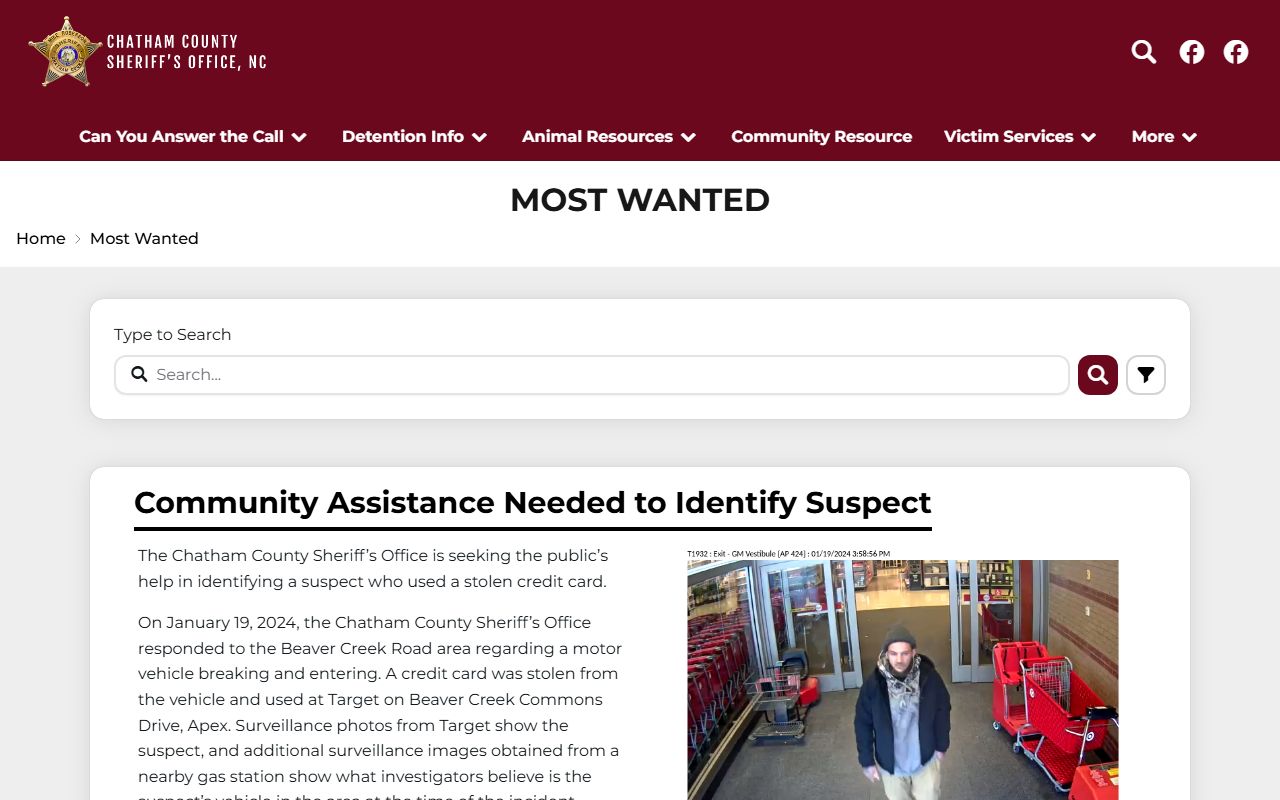
Because the public Most Wanted view depends on browser rendering, urgent warrant questions should not rely only on scraped text from that page.
Types of Chatham County Warrants
Warrant language can be confusing because several records may point to the same criminal matter. In Chatham County, the research supports a practical split: magistrate-issued criminal process, arrest and custody records handled by the Sheriff, court case records held by the Clerk of Superior Court, and hearing records in the NC Portal. A search warrant tied to an investigation may not be public in the same way as a warrant that led to an arrest.
- Arrest warrant means court or magistrate process authorizing law enforcement to arrest a person.
- Criminal summons means process served without arrest when a summons is issued instead of a warrant.
- Bench warrant or failure-to-appear order often relates to a missed court date or court compliance issue.
- Most Wanted notice is a Sheriff public safety channel, not a complete warrant index.
- Sealed warrant or indictment may not be public before arrest, service, or court action.
The Sheriff's inmate-search image is sourced from the Chatham Sheriff inmate search, an official channel that can show current custody after a warrant has resulted in arrest.
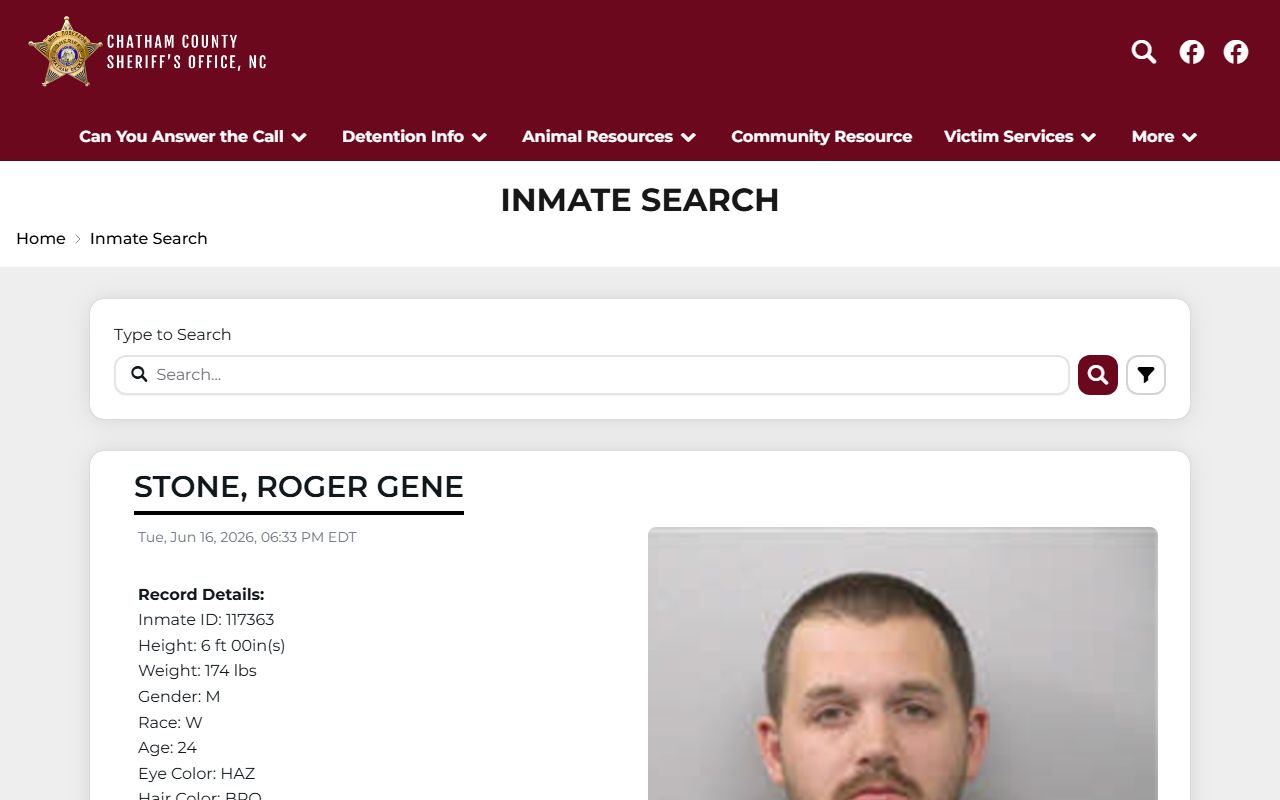
Current custody is warrant-adjacent evidence, not a full warrant record. The court case and hearing record still need review.
How to Search Chatham County Warrants
The cleanest Chatham County warrant search uses a fallback chain. Start with public Sheriff tools, then move to court tools, then call the Sheriff, Clerk, or magistrate when the record might be active but not visible. The research specifically says no statewide public warrant lookup was located in official sources for ordinary North Carolina warrants, so third-party warrant lists should be excluded.
- Search NC Portal Smart Search by name or case number, filtering to Chatham County when the case has reached court.
- Use NC Portal Search Hearings for pending court dates, especially if the issue may be a failure to appear.
- Check the Sheriff's inmate search and arrest blotter for current custody or a recent arrest entry.
- Use the Sheriff's Most Wanted page in a JavaScript-enabled browser for public safety listings.
- Call the Sheriff's Office at (919) 542-2811 for possible active warrant or Most Wanted questions.
- Call the Clerk of Superior Court at (919) 545-3500 for bench warrant or case-file questions.
- Use magistrate fallback for time-sensitive questions: business hours (919) 545-3519, after hours (919) 542-2911.
The steps above keep the search tied to official Chatham County and North Carolina channels. They also reflect the fact that a warrant may be active before it becomes a visible arrest, inmate, or case record.
Chatham County court users should also separate a warrant search from a court-date search. A person may find a pending hearing in Search Hearings even when the underlying warrant details are not public. A person may also find an arrest blotter entry after service, but that entry is not the same as the court order that authorized arrest. When the issue is a missed court date, the Clerk of Superior Court and magistrate contacts are more useful than a Most Wanted page.
Chatham County Warrant Search Fields
The researched search-field inventory does not show a local form labeled as a complete warrant lookup. It does identify fields on warrant-adjacent tools. Those fields help narrow a person, case, hearing, or custody status when a warrant has produced a public event.
| Channel | Field Label | Type | Required | Notes |
|---|---|---|---|---|
| Sheriff Most Wanted | Not visible | JavaScript app | Unknown | Page exists but required browser JavaScript in inspection. |
| Arrest Blotter | Type to Search | Text | Optional | Filters weekly blotter entries. |
| Inmate Search | Type to Search | Text | Optional | Filters current inmate cards with VINE links. |
| NC Portal Smart Search | Record number or name plus filters | Text and dropdowns | One criterion | Use name, case number, county, status, and type filters when available. |
| Search Hearings | Location, hearing, search type | Dropdown and text | Yes | Use Chatham County with case, name, citation, attorney, or courtroom criteria. |
What Chatham Warrant Records Show
Research did not verify a Chatham public warrant detail page showing warrant numbers, bond amounts, and full warrant fields. It did identify warrant-adjacent fields that may appear in court or Sheriff records. A public record may show a person's name, charge, case number, issuing court or magistrate, bond category, custody status, court date, and arrest or blotter date. Do not assume every field appears in every public view.
| Field | What It Can Show |
|---|---|
| Name | The person tied to the case, arrest, inmate card, or Most Wanted entry. |
| Charge | The alleged offense associated with the warrant, summons, or later case. |
| Case number | The court identifier once a warrant-adjacent matter becomes a filed case. |
| Issuing court or magistrate | The judicial source that may have issued process or handled first appearance. |
| Bond category | A release category such as cash bond, custody release, no bond, or secured bond when shown. |
| Court date | A hearing setting visible through the court hearing search or case record. |
| Custody status | Whether the person appears in current Sheriff inmate records or VINE status notice paths. |
The VINE image is sourced from North Carolina VINE, which is relevant when a warrant search has become a custody-status question.
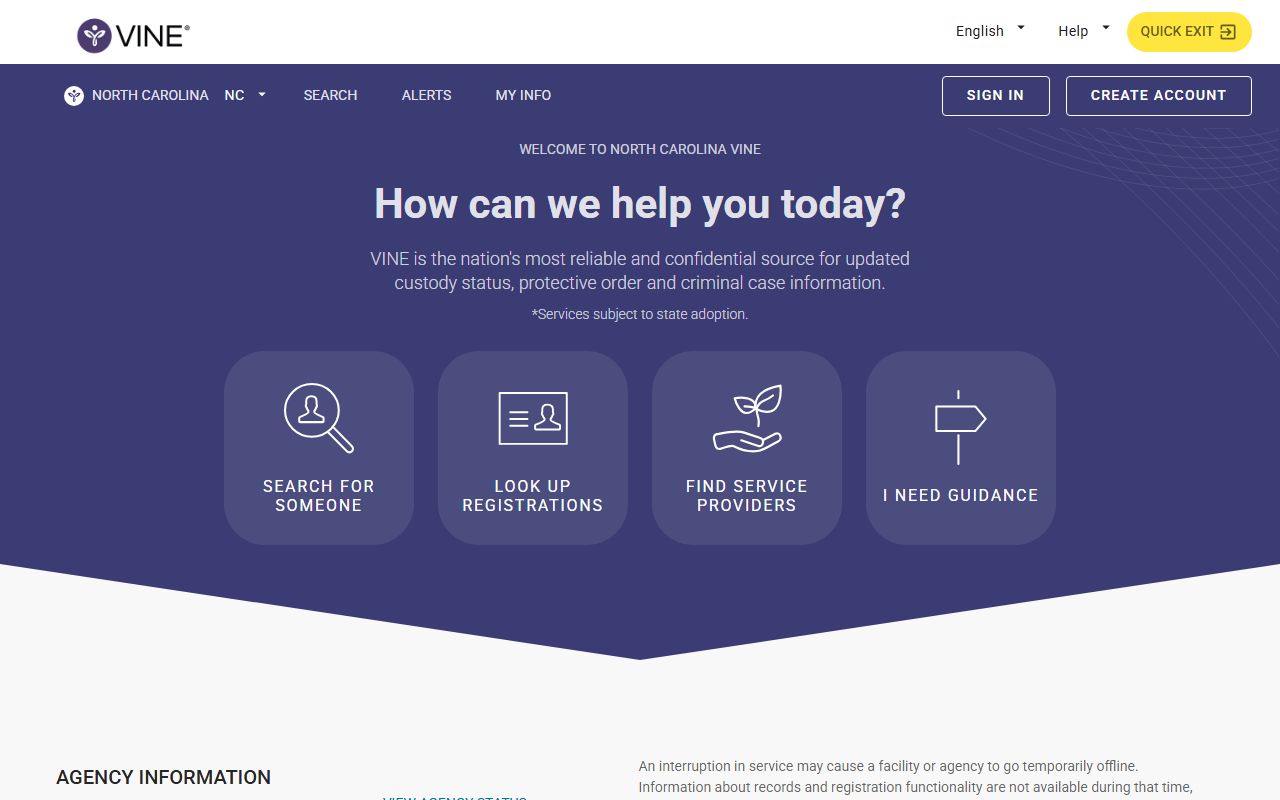
VINE is a notice and custody-status tool. It does not replace the court file or the Sheriff's warrant response.
Chatham County Warrant App Channels
The Sheriff's site promotes an OCV-powered mobile app named Chatham County Sheriff NC. Store listings say residents can report crimes, submit tips, use interactive features, and receive public safety news and information. The Apple listing says the app is not for emergency reporting and directs emergencies to 911. Research did not confirm an app-only inmate lookup or warrant lookup, so the app should be treated as an added Sheriff communication channel rather than a verified complete warrant database.
The Apple listing image is sourced from the Chatham County Sheriff NC app on the Apple App Store.
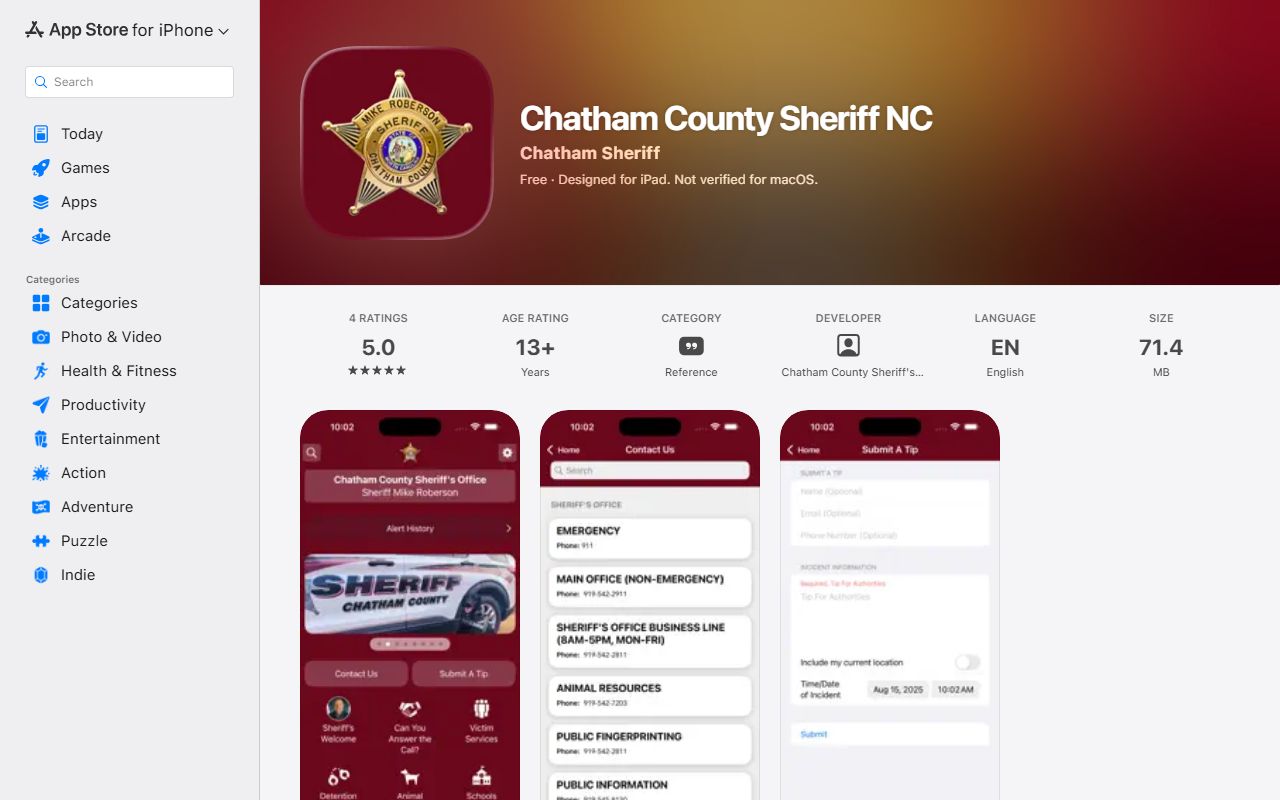
The app can help users receive Sheriff information. Active warrant confirmation still belongs with official Sheriff, magistrate, or court contacts.
The Google Play listing image is sourced from the Chatham County Sheriff NC app on Google Play.
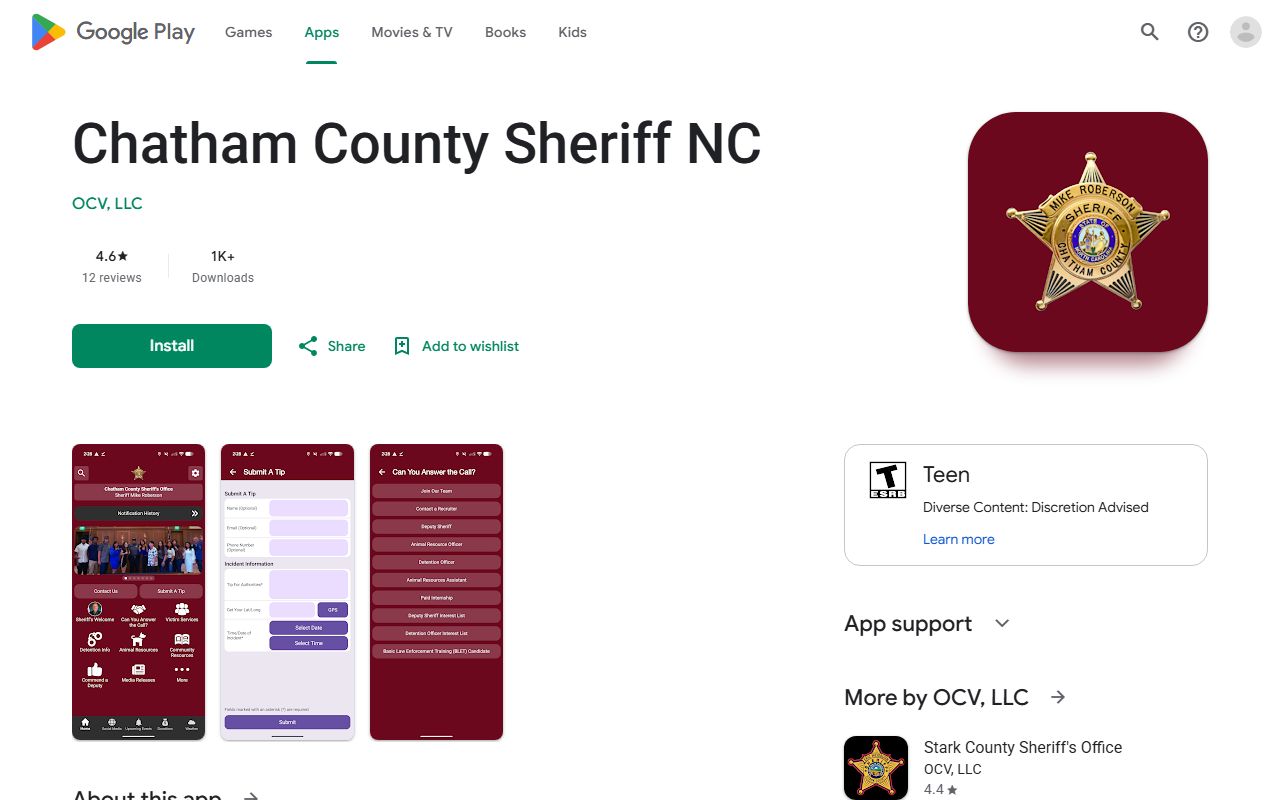
The two store listings confirm the official app name and public safety purpose, but they do not prove an online active-warrant database.
If You Have a Chatham County Warrant
A person who may have an active Chatham County warrant should not assume that payment alone will clear the issue. The research warning is specific: some matters require bond, arrest processing, judicial review, or attorney assistance. A failure-to-appear issue may need court action. A criminal warrant may involve arrest and release conditions. A Most Wanted listing or sealed matter may need direct Sheriff handling.
The court directory gives separate paths for these questions. The Sheriff's Office is the practical contact for possible active warrants, arrest status, and Most Wanted information. The Clerk of Superior Court is the practical contact for case records, bench warrant history, and court file review. Magistrate phone lines matter when the question involves process, release conditions, or after-hours handling. Those channels should be used before relying on a third-party search result.
Important: Call the appropriate official office before appearing in person when bond, arrest processing, or court review may be required.
For criminal case context, the related Chatham County arrest records and charges page explains how a warrant or summons can turn into a court charge record after arrest, service, or filing.
Restricted Chatham Warrant Records
Not all warrant records are public before service or arrest. The research identifies sealed warrants, juvenile matters, active investigations, and sealed indictments as areas where public access can be restricted. A blank search result does not always mean no warrant exists. It may mean the matter has not reached a public case record, is sealed, is juvenile, or is handled through a law enforcement channel that does not publish open warrant details.
Use official contacts for gaps. The Sheriff's Office is the fallback for possible active warrants and Most Wanted questions. The Clerk of Superior Court is the fallback for bench warrants, failure-to-appear court files, and case records. Magistrate phone lines are the fallback for immediate process and bond questions. Third-party warrant sites were not part of the official research and should not be used as authority for Chatham County warrant status.
VINE can be useful after a warrant results in custody because the Sheriff inmate cards link to custody-status notices. It does not answer whether a warrant remains open before arrest. NC Portal can be useful after a case opens, but a sealed indictment or active investigation may still be absent from public results. A cautious Chatham County warrant check treats online records as clues and official office contact as the confirmation path.